Chased by Someone You Cannot See Dream Meaning Explained
A chased by someone you cannot see dream meaning typically centers on an unidentified waking stressor, an unacknowledged emotion, or an impending life choice you are actively trying to avoid. You hear the rhythmic crunch of gravel behind you or the soft, rapid breathing of a presence hovering just out of sight, yet every time you whip around to confront your pursuer, there is only empty air. Your chest heaves, your pulse races, and the terror feels completely real even though the threat remains entirely invisible.
This experience is one of the most common variations of classic chase nightmares. Unlike dreams where a wild animal, a stranger with a weapon, or a known rival pursues you, the absence of a visible antagonist shifts the focus entirely onto the sensation of pursuit itself. The threat is not a concrete person; it is an atmosphere, a weight, or an approaching reality that feels impossible to outrun.
Waking up from a dream like this often leaves a lingering residue of tension throughout your morning. To make sense of why your mind created an invisible pursuer, it helps to examine how sleep neurobiology, depth psychology, and your personal life context interact when your eyes close.
Threat Simulation and Why Your Brain Hides the Chaser’s Face
In dream research, chase scenarios are among the most frequently documented nightmare themes across all age groups and cultures. Cognitive scientists often view these dreams through the lens of threat simulation theory, a model proposed by Finnish researcher Antti Revonsuo. According to this theory, dreaming evolved as an biological rehearsal mechanism, allowing the human brain to practice identifying and escaping danger in a risk-free virtual environment.
During REM sleep—the stage where our most vivid, narrative-driven dreams occur—the brain’s emotional center, the amygdala, becomes highly active while regions governing precise visual recognition operate with diminished control. When your subconscious mind generates a sense of threat during sleep, it does not always require a detailed character model to produce a fear response. If your waking life is filled with vague, ill-defined anxieties—such as financial insecurity, looming career shifts, or implicit relationship tension—the sleeping brain translates that nameless pressure into an unseen entity.
This aligns with the continuity hypothesis of dreaming, which suggests that our nocturnal storylines directly reflect our daytime emotional concerns. When an emotional stressor in your waking life lacks a clear face or immediate resolution, your dream engine mirrors that exact ambiguity by keeping the pursuer hidden in shadow or completely out of sight.
How Jungian Shadow Work Explains the Chased by Someone You Cannot See Dream Meaning
Depth psychology offers a complementary framework for understanding invisible figures in dreams. Carl Jung suggested that dreams serve a compensatory function, bringing balance to conscious attitudes that have become too rigid, defensive, or unexamined. In Jungian analysis, an unidentified or invisible pursuer frequently represents a classic manifestation of the shadow—the collection of personal traits, suppressed memories, or unwanted feelings that your conscious ego refuses to own.
When you spend your waking hours suppressing anger, denying grief, or ignoring a deep personal ambition out of fear, those disowned parts of yourself do not simply vanish. Instead, they gain energy within the subconscious. In a dream, the shadow takes form as a presence that follows you wherever you go. Because you refuse to acknowledge or look directly at these traits in your waking life, the dream represents them as something you cannot see.
The chase itself functions as a dynamic metaphor for avoidance. The harder you try to run away from an unintegrated aspect of your personality or an uncomfortable truth, the more relentlessly the unseen entity pursues you. Sigmund Freud similarly noted how day residue—the lingering, unresolved interactions of the preceding hours—combines with long-standing internal conflicts to trigger intense games of nighttime hide-and-seek.
Specific Dream Details: Hallways, Heavy Feet, and Sudden Paralysis
The specific setting and bodily sensations of your dream provide crucial context for interpreting what your subconscious is signaling. An unseen pursuer in a familiar setting, such as your childhood home or current workplace, often points toward localized stress related to family roles, professional expectations, or personal boundaries you feel unable to enforce directly.
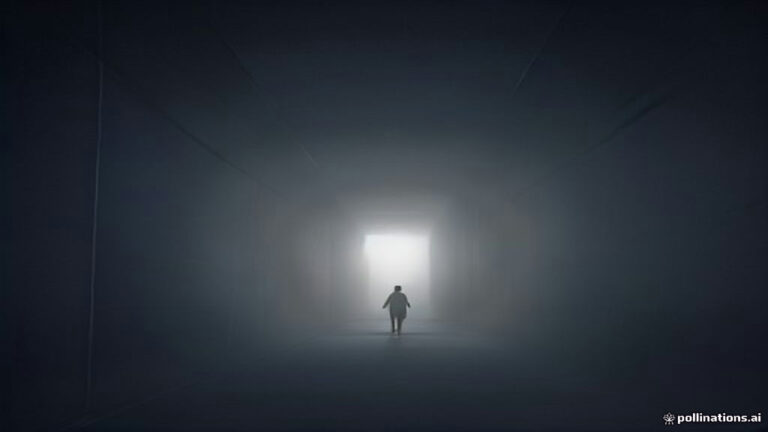
If you dream of fleeing through a narrow, dark alley or an endless series of twisting corridors, the structure of the space reflects feelings of containment or a lack of options in your waking life. You may feel that a deadline or major transition is closing in, leaving you nowhere to turn. Pay attention to how your body responds within the narrative. If you find yourself running as hard as you can but moving in slow motion, or if you experience a terrifying moment where you are unable to move or scream in a dream, your mind is capturing the feeling of powerlessness you may be brushing aside during the day.
Similarly, if the threat is accompanied by physical symptoms like gasping for air or feeling an oppressive weight on your chest—much like being unable to breathe in a dream—it highlights the real physiological strain that unaddressed emotional tension exerts on your nervous system during sleep.
Spiritual Traditions and Folklore of the Unseen Companion
Across human history, long before modern psychological research, various cultural and spiritual traditions sought to explain dreams of invisible chasers through rich symbolic metaphors. In many folk traditions across Western Europe, an unseen presence lurking in the shadows of a dream was viewed as a warning regarding unfulfilled obligations or forgotten ancestral promises.
In traditional Japanese folklore, concepts surrounding disembodied spirits expressed the belief that powerful, unexpressed human emotions—such as unspoken resentment or deep sorrow—could detach and haunt a person’s sleep without taking a distinct shape. Similarly, in several Indigenous North American cultural views, dreaming of a force you cannot see is interpreted as a call to realign yourself with your community or environment, suggesting that an imbalance in your daily habits requires quiet reflection and rest.
While modern readers generally understand these stories as symbolic metaphors rather than literal spirit visits, these traditions highlight a universal human truth: across time, we have always recognized that our internal friction can manifest as an invisible, haunting force in the night.
Grounded Practical Ways to Face the Unseen Pursuer
When you wake up shaken by an unseen pursuer, the most effective response is gentle self-inquiry rather than fear. Your dream is an invitation to identify what you are attempting to outrun in your conscious life. Start by asking yourself where in your life you feel quiet pressure or lingering apprehension. Are you putting off a difficult conversation? Are you ignoring signs of physical burnout?
Journaling immediately after waking can help bridge the gap between your subconscious and conscious awareness. Write down the sensory details of the dream: the sounds, the surrounding atmosphere, and where in your body you felt the panic. Then, list two or three situations in your daily routine that feel heavy or unresolved right now. Often, simply naming the hidden stressor robs the unseen pursuer of its alarming intensity.
It is worth noting that frequent or distressing nightmares are common and treatable. Frameworks like Imagery Rehearsal Therapy allow individuals to rewrite the ending of recurring nightmares while awake, systematically training the brain to respond with calm resolution rather than panic. If intense nightmares persist, disrupt your rest, or follow a traumatic life event, consulting a qualified doctor or mental health professional can offer compassionate, practical support.
Questions People Ask About Unseen Pursuer Dreams
Why can I hear footsteps behind me in a dream if no one is there?
Hearing footsteps without a visible body is your brain’s way of creating narrative tension using sensory cues during REM sleep. When the mind simulates danger, it frequently uses sound to heighten vigilance, mirroring real-life subtle stresses or environmental noises that you have not yet consciously processed.
Does the chased by someone you cannot see dream meaning indicate real-life paranoia?
No, having this dream does not mean you are paranoid or experiencing a mental health crisis. It is a widespread anxiety dream theme that usually reflects ordinary daytime pressures—such as tight deadlines, boundary issues, or avoided choices—translated into dramatic symbolic form by your sleeping brain.
What should I do if I keep waking up from this exact nightmare?
Focus on immediate physical grounding upon waking, such as placing your feet flat on the floor and taking slow, deliberate breaths. During the day, write down any unresolved tasks or feelings you might be putting off, and practice visualizing yourself turning around in the dream to peacefully confront the invisible presence.
An unseen pursuer in the night can feel haunting, but it ultimately functions as a protective alarm from your own mind. By turning to examine the subtle pressures and unacknowledged feelings in your waking life, you transform a frightening pursuit into an opportunity for personal clarity and rest.
Related reading