
Running Backwards from a Shadow Dream Meaning
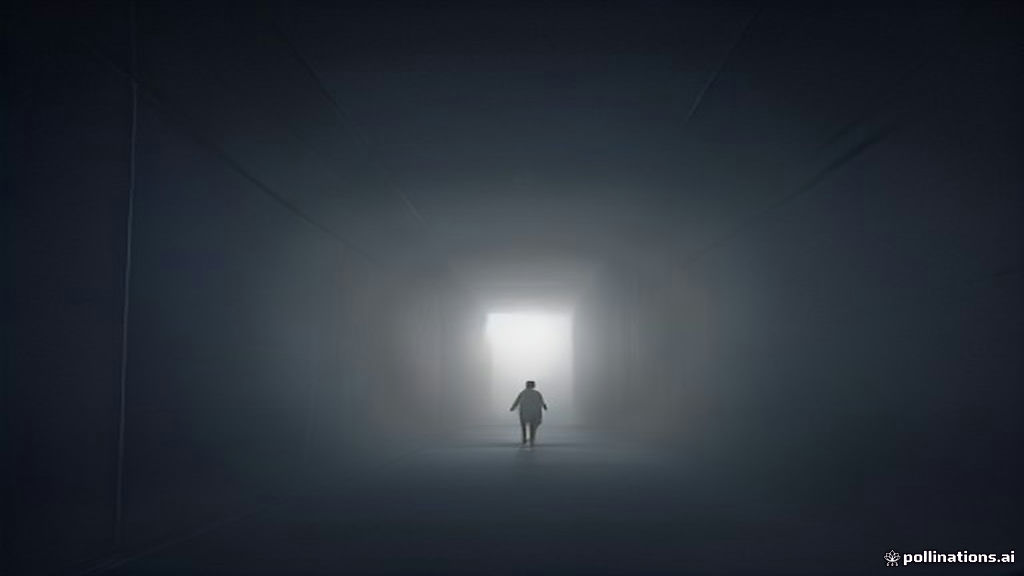
A running backwards from a shadow dream usually signals that you are retreating from an unacknowledged part of your life while keeping your gaze locked directly on the fear itself. Unlike a conventional chase where you turn your back and sprint blindly into the dark, moving backward forces you to look straight at the threat. You are retreating from something looming, yet you cannot take your eyes off it, leaving you vulnerable to whatever lies behind you.
This distinct movement reflects a state of psychological tension. Your body is moving away, but your awareness is pulled entirely toward the unknown silhouette in front of you. In sleep science and depth psychology, this imagery highlights a conflict between the instinct to escape an overwhelming feeling and the refusal to break eye contact with what disturbs you.
When you wake from a dream like this, your heart might be beating fast, accompanied by a disorienting sensation of stumbling over unseen terrain. Understanding why your sleeping mind chose this unusual, inverted escape route can offer surprising clarity about how you handle pressure, boundaries, and emotional discomfort in your waking hours.
The Blind Flight: Why Backward Movement and Shadows Collide in REM Sleep
To understand a running backwards from a shadow dream, it helps to start with the physical reality of sleep. Most vivid, story-driven dreams occur during Rapid Eye Movement (REM) sleep. During this phase, your brain sends normal motor commands, but your body experiences REM atonia—a temporary, healthy paralysis of your voluntary muscles that prevents you from physically acting out your movements. When you try to run fast in a dream, your brain registers the lack of real feedback from your legs, which often translates into heavy, sluggish, or awkward movement.
Cognitive scientist Antti Revonsuo proposed the threat simulation theory, which suggests that danger-driven dreams serve as an evolutionary laboratory. Your mind simulates threat scenarios so you can practice emotional and physical navigation without real-world risk. When you dream of fleeing in reverse, your brain is combining threat simulation with impaired somatic feedback. You want distance, but your motor cortex cannot execute a clean forward sprint, so your dream self defaults to an awkward, backpedaling retreat.
According to the continuity hypothesis of dreaming, the emotional themes in your sleep closely parallel your daily thoughts and stressors. If you are backing away from an unformed silhouette, you may be experiencing a real-life situation where you feel forced to pull back from a confrontation, an intimidating task, or an uncertain boundary, while remaining hyper-vigilant about its every move.
Facing the Unseen Self: Depth Psychology and the Jungian Shadow
In depth psychology, particularly in the work of Carl Jung, the shadow represents the unconscious parts of your personality that your conscious ego prefers to ignore, deny, or hide. The shadow is not inherently evil; rather, it contains disowned feelings, unexpressed desires, suppressed anger, or artistic instincts that you feel social pressure to keep tucked away. When you encounter an unformed darkness in a dream, you are often face-to-face with a projection of these disowned traits.
The choice to run backward is psychologically significant. If you turned and ran forward, you would be engaged in pure avoidance, ignoring the threat completely. Backpedaling means you are hyper-focused on what scares you. You are aware that the shadow exists, yet you do not feel equipped or ready to integrate it. Jung suggested that dreams act as a compensating mechanism to balance your conscious attitude. If you act overly confident or calm during the day while pushing down your insecurities, your mind may stage a scene where an intimidating silhouette forces you into a cautious, backward retreat.
If you have ever felt unable to run away from danger in other sleep scenarios, pairing that feeling with reverse movement emphasizes a sense of regression. Instead of stepping forward into your future, you are stepping back into blind territory, afraid that taking your eyes off the shadow for even a second will allow it to overwhelm you.
How Setting and Spatial Surroundings Reshape the Backward Escape
The specific terrain of your dream provides essential context for interpreting what your subconscious is navigating. Running backward on a wide, open field feels vastly different from backpedaling down a narrow, claustrophobic hallway.
- A Narrow Hallway or Corridor: Retracting your steps down a enclosed space suggests that your choices feel limited. You may feel boxed in by commitments or family expectations, moving backward because turning around feels physically or emotionally impossible.
- Your Childhood Home: If the backward pursuit takes place in a setting from your past, the shadow often links to long-standing habits, unresolved family dynamics, or early childhood anxieties that you thought you had outgrown.
- An Open, Unfamiliar Field: Backpedaling across an open landscape highlights a deep fear of the unknown. Because you cannot see what is behind you, every step threatens a fall, mirroring a waking fear of taking a wrong step in your career or personal life.
- An Urban Alley or Foggy Street: Shadows in cityscapes often point to social expectations, public identity, or workplace pressures where you feel observed and judged.
Pay attention to how your movement felt underfoot. Were your feet light, or did you feel like you were moving through wet cement? Sluggish backward movement points toward deep fatigue or a feeling that your conscious effort to distance yourself from a problem is failing.
Folklore, Thresholds, and the Symbolism of Inverted Motion
Across various cultural and historical traditions, walking or running backwards carries rich symbolic meaning. In European folklore, walking backward was often viewed with caution, believed to undo progress, invite bad luck, or mark a crossing into liminal spaces where ordinary rules do not apply. Conversely, in certain protective ritual traditions, keeping your eyes on a perceived spirit while slowly stepping backward was seen as a sign of defensive respect and caution—a way to exit a high-stakes encounter without exposing your back to danger.
Shadows themselves hold a universal position in spiritual symbolism. They represent threshold states—the space between light and dark, known and unknown. In ancient Egyptian beliefs, the shadow (known as the Ska) was a vital component of the human soul, containing essential personal essence. Dreaming of fleeing a shadow was not seen as a curse or bad omen, but as a spiritual prompt indicating that a vital piece of the self was being neglected and needed to be re-examined.
When combined with retro-gait imagery—similar to experience found in dreams of flying backwards without control—cultural readings suggest that you are being asked to retrace your steps. Rather than rushing blindly toward new goals, your spirit or subconscious mind is signaling a need to review past decisions before you can safely turn around and stride forward.
Reflecting on the Retreat: Practical Questions for Your Waking Hours
Because dream symbols are personal interpretations rather than fixed predictions, the true meaning of your dream depends on your unique circumstances. You are the ultimate authority on your own life. Use these grounded reflection prompts to help uncover what your mind was working through while you slept:
- What current situation in your life feels looming or uncertain, yet impossible to look away from?
- Are you avoiding a necessary conversation or decision, choosing instead to slowly back away while keeping an eye on the potential fallout?
- What hidden feelings—such as anger, grief, ambition, or boundary-setting—might the shadow represent?
- When you were moving backward in the dream, what were you most afraid of hitting or tripping over behind you?
If you wake up feeling anxious after a running backwards from a shadow dream, ground yourself in your physical environment. Practice placing both feet flat on the floor, breathing deeply, and reminding yourself that the shadow in your dream carries no power of its own; it is simply a reflection formed by your mind to help you notice what needs care and attention in your life.
Questions People Ask About Running Backwards From Shadows in Dreams
Why couldn’t I see where I was stepping while running backwards?
Moving backward in a dream creates a clear sensory disconnect: your focus is locked on the threat in front of you, leaving your path unseen. Psychologically, this reflects a waking state where hyper-focusing on an intimidating situation prevents you from noticing where your choices are taking you next.
What does it mean if the shadow was growing larger as I retreated?
When a shadow expands while you back away, it often illustrates the principle that avoiding a problem increases its emotional weight. In Jungian psychology, the more you retreat from an unaddressed truth, the more imposing and overwhelming it appears to your conscious mind.
Is running backwards away from a shadow always a sign of anxiety?
Not always. While it often stems from stress or hyper-vigilance, backpedaling can also represent a cautious, deliberate retreat. It may indicate that your subconscious mind is wisely advising you to step back from a toxic environment or bad decision while keeping your eyes open to the potential consequences.
Dreams of backpedaling from an unformed shadow can feel deeply disorienting, but they carry an empowering invitation. By showing you where you are hesitating and what you are afraid to turn your back on, your sleeping mind invites you to pause, plant your feet firmly on the ground, and gently examine what you are ready to face.
Related reading



One Comment