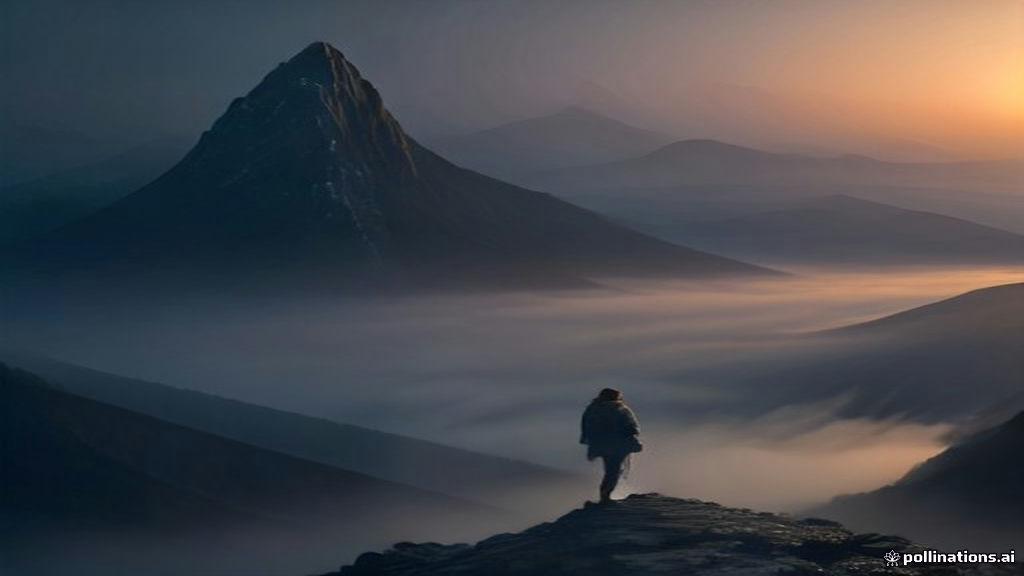
Spiritual Guide on Mountain Dream Meaning Explained
A spiritual guide on mountain dream meaning often points directly to your inner search for clarity, perspective, and moral direction during a pivotal moment in your waking life. When you dream of standing on a cold, high peak and meeting a mentor, wise figure, or quiet teacher, your sleeping mind is synthesizing high-level self-reflection with deep emotional processing. Rather than predicting the future, this dream reflects your current readiness to step back from daily noise and consult your highest internal standards.
High places and figures of wisdom are among the most persistent motifs in human dreaming. To wake up with the crisp alpine air still in your lungs and the impression of a silent or speaking guide standing beside you can leave a deep, quiet resonance that lasts for days. Understanding this experience requires looking at how your brain handles complex symbols during sleep, how depth psychology views internal guides, and how ancient traditions have viewed the high crest as a place of clarity.
Whether the figure on the peak spoke in clear sentences, offered a symbolic object, or simply stood in quiet presence while you looked out over the horizon, the scene is an invitation to explore what your subconscious is trying to organize and bring into focus.
Myth: Encountering a Wise Mentor at High Altitude Is Literal Spirit Telepathy
Popular online claims frequently insist that meeting a mentor figure on a peak is definitive proof of telepathic communication with an external guardian or an ethereal entity. While this interpretation offers comfort to many, cognitive science and sleep research suggest a grounded and equally profound explanation grounded in human biology.
Most rich, narrative-driven dreams occur during Rapid Eye Movement (REM) sleep. During this phase, the brain’s prefrontal cortex—the area responsible for logical filter work and waking self-awareness—operates in a altered state, while the limbic system, which processes memory and emotion, becomes highly active. According to the continuity hypothesis of dream research, our dreams naturally project our waking emotional concerns, internal dialogues, and subconscious values into visual allegories. The figure standing at the timberline is not necessarily a visitor from another plane, but rather an personification of your own quiet intuition—the part of your psyche that holds perspective when your waking ego feels overwhelmed.
Claim: Reaching the Alpine Crest Means You Have Achieved Higher Consciousness
Another widespread assumption in internet dream lore is that dreaming of a summit guide indicates you have reached a final stage of personal enlightenment or permanent spiritual triumph. Pop-psychology sites often frame the mountain top as a destination where personal struggles permanently end.
Depth psychology offers a much more realistic reading. Carl Jung noted that high places in dreams symbolize temporary perspective rather than permanent elevated states. Reaching a high vantage point allows you to see the terrain below—your relationships, career stress, or long-term goals—with exceptional distance and clarity. The guide on the mountain does not mean you have arrived at perfection; rather, it suggests that your mind has temporarily created the quiet conditions needed to inspect your life from a distance. The mountain peak in a dream is an observatory, not a permanent dwelling.
The Archetype of the Wise Old Man and the Elevation Symbolism in Depth Psychology
In Jungian psychology, the figure met on the high ridge frequently represents the archetype of the Wise Old Man or the Wise Woman—an internal expression of the Self that balances the immediate desires of the ego. When daily life becomes chaotic or conflicting choices create internal friction, the psyche often creates a character that embodies calm authority, balance, and historical patience.
The mountain setting reinforces this psychological function. Standing on rock above the treeline strips away clutter. There are no crowded streets, office notifications, or domestic distractions at twenty thousand feet in your sleep architecture. In this sparse environment, your mind can project an internal guide to deliver insights that you might ignore during waking hours. The guide’s voice—or even their wordless gesture—is often an reflection of what you already know to be true but have been hesitating to accept while handling daily responsibilities.
Sometimes these high-altitude figures reveal visual forms that parallel other symbolic dreams. For instance, if the sky above the summit contained ordered patterns similar to those seen in a glowing mandala dream symbolism reading, your mind may be pairing the wisdom figure with geometric symbols of wholeness and mental structural balance.
How Sacred Peaks and Desert Ascents Shape Dream Lore Across World Traditions
Long before modern neuroscience or depth psychology existed, cultures across the globe recognized mountains as natural altars where human life met the cosmic order. In ancient Near Eastern traditions, figures like Moses ascended Mount Sinai to receive moral laws, while Elijah heard a quiet voice on Mount Horeb. In East Asian traditions, Mount Kailash and sacred Taoist mountains were viewed as literal axes of the world where sages retreated to harmonise with the Tao.
In many indigenous traditions of North America, high places were deliberately sought out during vision quests. Fasting on a high ridge stripped away physical distractions, opening the traveler to dreams that might reveal their adult name, personal responsibility, or community calling. When you dream of a guide on a mountain, you are tapping into a long human lineage that uses geography as a metaphor for spiritual focus. Traditions frame these dreams not as random noise, but as sacred moments where an individual is called to examine their integrity, character, and relationship with their community.
Deciphering the Details: Silence, Terrain, and Clues at the Summit
To understand what your specific dream is bringing to light, pay close attention to the texture of the environment and the interaction between you and the guide:
- The condition of the trail: Was the climb up the mountain agonizing, treacherous, or smooth? A difficult ascent suggests that the insight offered by your internal guide was hard-won through recent struggle or emotional effort.
- The demeanor of the guide: Did the guide offer direct words, a simple posture, or a stern gaze? Silence from a spiritual guide often reflects a subconscious realization that you already hold the answer you seek and merely need the confidence to act on it.
- The view from the top: Looking down at a clear, sunlit landscape implies emerging clarity over a complex decision. Looking out into dense fog or a starry void—reminiscent of cosmic structures explored in a floating geometric shapes dream guide—suggests you are still learning to sit comfortably with uncertainty.
- Gifts or objects received: If the figure handed you an item—such as a staff, a stone, or a lamp—the object represents an emotional or practical tool you possess in waking life that you are currently underutilizing.
Integrating the Alpine Message into Your Morning Decisions
The true value of a mountain guide dream depends on how you integrate its quiet atmosphere into your actual morning. Rather than treating the dream as a magical event or dismissing it as random brain activity, use it as a tool for intentional reflection.
Start by writing down every detail you remember before the feeling fades: the temperature of the air, the appearance of the guide, the emotions you felt standing beside them, and any specific words spoken. Ask yourself what current situation in your life requires the distance and perspective of a high mountain peak. Is there a career move, a relationship choice, or an ethical dilemma where you have been ignoring your own best advice?
Your own judgment always comes first. A dream guide is an internal reflection, not an external dictator. Use the calm, objective feeling from the dream summit to evaluate your choices with greater composure, patience, and honesty.
Questions People Ask About Dreaming of Wise Guides on High Peaks
What does it mean if the guide on the peak remains silent or turned away?
Silence from a dream mentor usually points to self-reliance. When a guide refuses to speak or simply points toward the horizon, your subconscious is indicating that you do not need external instruction or further advice. You already possess the information required to make your decision, and the dream is encouraging you to trust your internal judgment rather than searching for constant reassurance outside yourself.
Why do mountain guide dreams feel so much more lucid and emotionally vivid than ordinary sleep?
High emotional intensity in dreams often corresponds to high REM density and heightened activity in the amygdala and anterior cingulate cortex. When a dream touches on core personal values, major life transitions, or deep identity questions, your brain attaches strong emotional weight to the imagery. The vast, simple backdrop of a mountain peak concentrates your focus on the central interaction, making the experience feel uniquely clear and memorable.
Does the identity or appearance of the spiritual figure alter the dream’s meaning?
Yes. If the guide takes the form of a recognized historical figure, an ancestor, a religious symbol, or a stranger, your mind is utilizing that specific persona’s cultural or personal associations. A recognized ancestor highlights family heritage or traditional values, whereas an anonymous cloaked traveler emphasizes abstract wisdom, self-discovery, and the unknown aspects of your own maturing character.
When you descend from the metaphorical peak and return to the noise of daily routines, carry the stillness of the height with you. The guide on the mountain was built from your own capacity for wisdom, showing that even in moments of confusion, a grounded and clear perspective remains accessible within you.
Related reading