
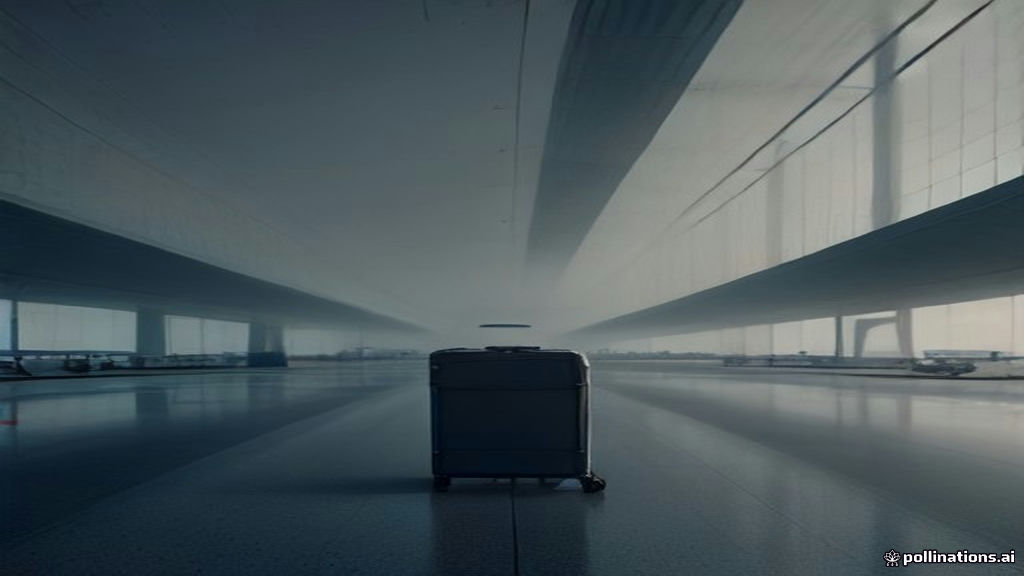
Missing Flight at Airport Dream: What It Really Means
A dream featuring a missing flight at airport gates often points to an underlying fear of passing a major life threshold before you feel fully prepared. You might wake up with your pulse hammering, still feeling the desperate weight of running through endless glass concourses, watching the electronic board flip to “Departed,” or seeing the jet bridge retract just out of reach. It is a visceral, panic-inducing scene that leaves you breathless long after the morning alarm goes off.
Airports are unique spaces in the human experience. They are true liminal spaces—transitional environments where you are no longer where you were, but not yet where you are going. When your sleeping mind simulates missing a flight at airport security or gates, it rarely concerns an actual vacation or business trips. Instead, it translates the quiet pressure of waking deadlines, fear of lost opportunities, and emotional transitions into a high-stakes dramatic narrative.
Understanding this dream doesn’t require treating your night thoughts as magical premonitions or strict fortune-telling. By looking at sleep science, historical depth psychology, and long-standing cultural traditions, you can begin to unpack what your brain is attempting to process while you rest.
The Departure Board Panic: Threat Simulation and Cognitive Processing
From the perspective of modern sleep science, vivid transit scenarios occur primarily during Rapid Eye Movement (REM) sleep, the stage where the brain’s emotional centers—particularly the amygdala—are highly active while the logical prefrontal cortex is partially muted. Researchers like Antti Revonsuo have proposed the threat simulation theory of dreaming, which suggests that our minds intentionally construct high-stress scenarios during sleep to rehearse responses to social or emotional hazards.
In everyday modern life, missing an actual flight is one of the few socially accepted, high-consequence administrative failures. It carries real costs: wasted money, missed events, and public frustration. When your mind wants to simulate the intense feeling of falling behind or failing to meet an unforgiving expectation, an airport terminal provides the perfect symbolic backdrop. Sleep research also frequently points to the continuity hypothesis, which observes that dream themes directly reflect waking concerns, unresolved conflicts, and emotional states. If you have been feeling squeezed by project deadlines, aging, family milestones, or career changes, experiencing a missing flight at airport checkpoints in your sleep is your brain’s candid reflection of that internal rush.
It is also worth noting how physically detailed these dreams can be. You might remember trying to drag oversized luggage that keeps bursting open, or finding yourself trapped in a security line where the line never moves. These details often map onto waking sensations of friction—moments where your conscious effort isn’t yielding the forward momentum you expect, similar to the sensation people describe in a gas pedal not speeding car up dream.
Jungian Thresholds and the Shadow of Artificial Deadlines
Depth psychology offers another layer of understanding, looking at dream images not just as cognitive dry runs, but as symbolic conversations between the conscious ego and the deeper unconscious self. Carl Jung viewed vehicles and collective transport systems—like trains, buses, and airplanes—as symbols of chosen life directions and social momentum.
An airplane, specifically, represents a rapid, high-altitude transition. Unlike walking or driving, air travel requires you to surrender individual control to an external system and a strict timetable. You buy the ticket, show up on time, and trust the aircrew to launch you into the sky. When you dream of a missing flight at airport terminals, Jungian analysis often looks at the concept of compensation. If your waking ego is pushing too hard, obsessing over schedules, or forcing a trajectory that doesn’t align with your true emotional readiness, the unconscious mind creates a counter-balancing scenario where the journey is abruptly halted.
Sigmund Freud famously noted the influence of “day residue”—minor events or anxieties from the previous 24 to 48 hours that seed our night stories. Perhaps you saw an urgent email before bed or felt a quiet pang of regret over an opportunity you turned down weeks ago. Depth psychology suggests that missing the plane in your sleep may actually be a protective mechanism: your unconscious self pulling the emergency brake because deep down, you aren’t ready for the altitude or the destination your waking self is rushing toward. In this sense, it shares thematic roots with a missing your stop on the train dream, where public transit schedules highlight our anxiety about missing life’s natural timing.
Terminal Boundaries: Cultural Views on Timelines and Gateways
Long before commercial air travel existed, human cultures told stories about missed voyages, delayed caravans, and lost ships. Across various folkloric and cultural traditions, missing a major embarkation point carries nuanced meanings rather than purely negative omens.
- Cross-cultural traditions: In several Mediterranean and Near Eastern folk traditions, an unexpected delay or missed departure during a journey was often viewed as a subtle form of divine intervention or protective redirection—a belief that being held back preserved the traveler from an unforeseen danger further down the road.
- Modern cultural folklore: In Western industrial cultures obsessed with productivity and efficiency, dreaming of missing a departure heavily reflects the internal pressure of social clocks (such as expectations around when to graduate, buy a home, marry, or reach career goals).
- Liminal lore: Anthropologists note that physical gateways (archways, harbors, crossroad stations) historically required rituals of preparation. Missing the gate in a dream often symbolizes arriving at a life threshold without completing the necessary internal preparation first.
Viewing these cultural perspectives helps strip away the panic. Rather than viewing the dream as a sign of failure, many traditions encourage seeing the missed flight as a moment of enforced pause—a temporary delay that demands you re-evaluate what you are carrying in your bags before you try to soar.
Recalibrating Your Schedule: Practical Steps After the Dream
Waking up from a high-stress dream leaves a real biological hangover. The adrenaline coursing through your system is genuine, even if the missed boarding call was entirely imaginary. Instead of letting the lingering panic ruin your morning, you can use the dream as a practical pulse-check on your waking life.
First, separate social expectations from personal readiness. Ask yourself where in your life you feel an overwhelming sense of urgency. Is the deadline real, or is it an artificial timetable you’ve adopted to satisfy others? Second, audit your daily commitments. Often, the panic of a missing flight at airport terminals mirrors the daily feeling of drowning in small, administrative hurdles—packing, checking paperwork, navigating security lines—that keep you from focusing on the larger journey.
Give yourself permission to pause. The dream has already enacted your worst-case administrative scenario, and you survived it. Use the morning after to ground yourself in concrete reality: take slow, physical breaths, review your actual calendar with a calm lens, and give yourself grace if your personal pace doesn’t match the speed of those around you.
Questions About Missing Flight at Airport Dreams
What happens if you miss your flight at the airport in a recurring dream?
Recurring dreams of a missing flight at airport gates suggest that an underlying waking stressor remains unaddressed. When the mind repeats the same high-anxiety scenario night after night, it usually points to a chronic feeling of unreadiness or persistent pressure regarding a major life decision. Tracking when the dream occurs in a dream journal can help you identify specific waking triggers, such as recurring work sprints or ongoing personal transitions.
What happens if TSA makes you miss your flight in dream scenarios?
Dreaming that security screeners, long queues, or lost paperwork caused you to miss your plane shifts the focus from personal tardiness to external obstacles. Psychologically, this often reflects a feeling that bureaucratic rules, institutional red tape, or the demands of authority figures are actively holding you back from achieving your goals despite your best efforts to comply.
What to do if you miss your plane in a dream state and wake up anxious?
When you wake up with a pounding heart from a dream where you miss your plane, focus on immediate somatic grounding. Place your feet firmly on the floor, drink a glass of cool water, and remind yourself out loud that you are safely at home and not in an airport concourse. Writing down the exact details of the dream can also help externalize the anxiety, moving it from your emotional brain to your analytical mind.
Can an airline charge you for missing a flight in real life, and why does financial stress mirror this dream?
In real-world travel, missing a flight can incur no-show fees or require buying a new ticket, which is why financial worry so frequently leaks into travel dreams. In dream symbolism, the threat of financial or administrative penalties mirrors our waking fear of real-world consequences—such as lost income, wasted effort, or damaged reputations—if we fail to meet high-stakes demands.
Ultimately, a dream about missing a flight is not a prophecy of doom or a verdict on your competence. It is simply a vivid, uncomfortable signpost from your sleeping mind, gently asking you to drop the heavy baggage, step out of the frantic concourse crowd, and take a deep breath before deciding where you truly want to travel next.
Related reading



One Comment