
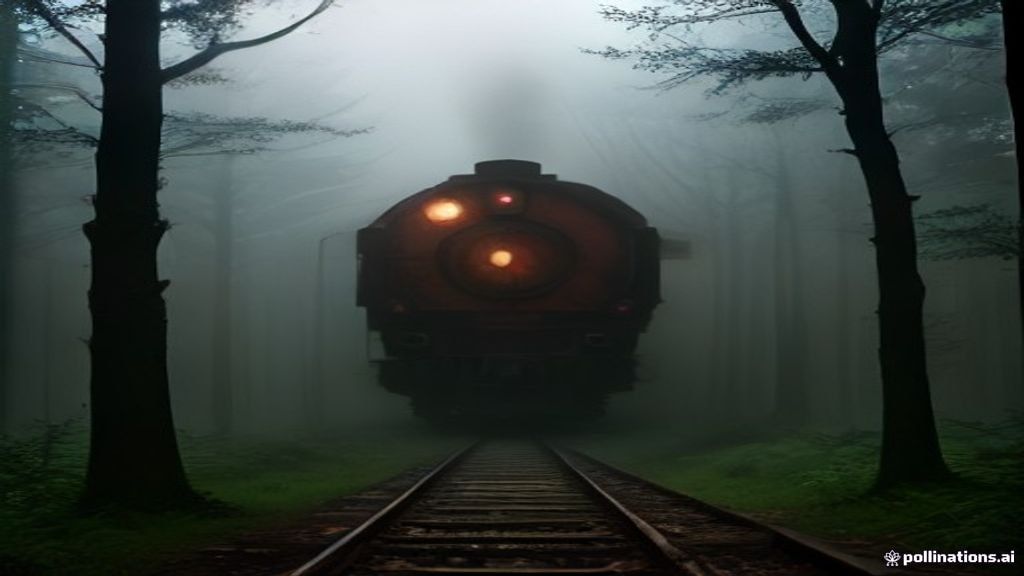
Dreaming of Abandoned Train Tracks: A Path Left Behind
Rust and weeds cover the rails, and the line runs off toward a horizon where no train has come in years. You walk along it, wondering where it once led. When you wake from a vivid scene involving dreaming of abandoned train tracks, the sensory impression often lingers long after your eyes open, prompting a closer look at how your inner world processes “a path left behind.”
Dreaming of abandoned train tracks usually symbolizes a path or plan that has been left behind, lost momentum, or a journey that never finished. The rails still point somewhere, so the dream asks whether to revive the route or choose a new one. Because dreams speak in condensed visual metaphors rather than plain conversational language, the appearance of abandoned train tracks highlights themes that your conscious mind may have been too busy—or too guarded—to address during the day. By unpacking both the emotional tone and the specific actions you took in the dream, you can turn a puzzling night vision into practical self-understanding.
Psychological Reasons You Dream About Abandoned Train Tracks
Dreams featuring abandoned train tracks rarely emerge out of nowhere. They typically surface during weeks when your emotional bandwidth is stretched, when a subtle shift in your daily routine demands adaptation, or when an unspoken truth related to a path left behind asks for honest recognition.
The dream often appears when a career, relationship, or goal has stalled or ended. This dynamic frequently appears during transitional chapters—such as shifting roles at work, evolving family expectations, or personal reassessment—where old habits no longer fit as comfortably as they once did. This emotional pattern often parallels the themes found in dreaming of a car stuck on train tracks: danger of standing still, where the subconscious uses vivid imagery to bring background concerns into conscious view.
Tracks stand for fixed direction, so abandoned ones can reflect feeling that your options are closed. In everyday life, it is easy to push complex reactions aside in order to meet deadlines, care for others, or maintain a composed outward appearance. Once you fall asleep, however, your logical defenses relax and allow those deferred feelings around abandoned train tracks to take visual form.
They may also mark nostalgia for a past path and curiosity about what could have been. Recognizing this connection helps remove any sense of mystery or alarm from the dream. Instead of feeling blindsided by the imagery, you can see how directly it mirrors the choices, responsibilities, and emotional currents you have been navigating in waking life. Readers who notice this dynamic also frequently connect with dreaming of seashells: memory, calm and treasures left behind, which explores how related inner tensions take shape during sleep.
How Traditional Lore and Symbolic History View Abandoned Train Tracks
In comparative mythology and sacred traditions worldwide, rivers, rain, wetlands, and shifting waters represent the lifeblood of renewal, purification, and the irreversible flow of time. Ancient agricultural and philosophical texts consistently used water states—whether clear, frozen, overflowing, or still—to describe how the human spirit absorbs change, cleanses old sorrow, and adapts to the seasons of life. As noted in reference works such as the Library of Congress folklore and cultural symbolism collections, symbols that endure across cultures do so because they capture universal human experiences surrounding a path left behind.
At the same time, responsible dream interpretation always places your personal associations above any generic dictionary entry. A symbol like abandoned train tracks carries one layer of meaning from shared cultural memory, and an equally important layer from your own lived memories, beliefs, and recent emotional conversations around a path left behind.
How Depth Psychology and Sleep Research Explain Abandoned Train Tracks Visions
From a neurobiological perspective, vivid dreams involving abandoned train tracks take shape primarily during rapid eye movement (REM) sleep. During this stage, neuroimaging studies show that the limbic system—especially the amygdala, which processes emotional salience, and the hippocampus, which consolidates autobiographical memories—is highly active, while the dorsolateral prefrontal cortex (responsible for linear logic and executive inhibition) reduces its activity. According to the Sleep Foundation overview of REM sleep and dream processing, this unique brain state allows the sleeping mind to weave recent daytime concerns around a path left behind into striking visual metaphors without the censorship of waking rationalism.
From a Gestalt dreamwork perspective, every element in a dream—including abandoned train tracks and the surrounding atmosphere—represents a projected aspect of the dreamer’s own psyche. Rather than viewing abandoned train tracks as a purely external force acting upon you, depth psychologists invite you to ask how its qualities mirror an internal energy you are currently wrestling with. Understanding a path left behind through this lens transforms the dream from a passive experience into an active dialogue between your conscious identity and your deeper intuitive wisdom.
How Context and Action Shape Your Abandoned Train Tracks Dream
No two dreams of abandoned train tracks unfold in the exact same way. The specific action taking place, the condition of the surroundings, and your emotional response inside the scene shift the interpretation in important ways:
Overgrown tracks
When the scene centers on overgrown tracks, this specific detail suggests a path unused for a long time. Depth psychologists note that small shifts in a dream’s imagery reflect real shifts in how your subconscious evaluates a waking challenge. Rather than viewing overgrown tracks as an isolated detail, connect it to how you have been handling a path left behind over the past several weeks.
Tracks ending abruptly
May reflect a sudden stop in a plan. Experiencing tracks ending abruptly within a dream about abandoned train tracks underscores the interplay between your outward circumstances and your inner emotional resilience. Take note of what happened immediately after this moment in the dream—whether the tension eased, intensified, or shifted into a new scene—as that progression often mirrors your intuitive expectation of how a current waking chapter will resolve. If your dream carried a similar surge of intensity, comparing it with dreaming about a pet that has died: what it really means can shed additional light on how your mind processes high-stakes transitions.
Walking along them
In dreams where walking along them stands out as the defining moment, it often links to reflecting on a past choice. This variation often surfaces when your waking mind is weighing two different ways of responding to a commitment or relationship. Reflecting on whether walking along them brought a sense of relief or urgency will help you identify your truest priority. You can also see a related symbolic dynamic in dreaming of a runaway train: momentum beyond control, which examines how our posture inside a dream mirrors our waking resilience.
A train returning
Can reflect a chance to revive an old goal. Because dream imagery is highly sensitive to emotional nuance, noticing a train returning helps narrow down what area of your daily routine is asking for attention. Consider whether this scenario mirrors a recent conversation or a longer-term personal goal around a path left behind.
Separating Myth from Psychology in Abandoned Train Tracks Dreams
It does not predict a failure or a dead end. It reflects lost direction and unused paths. Popular folklore often treats vivid sleep imagery as a fixed omen of future events, which can create unnecessary worry the next morning. In reality, your dreaming brain uses symbolic exaggeration around abandoned train tracks to illustrate internal feelings, not to predict external fortune or misfortune.
Rather than reading abandoned train tracks as a fixed fortune-telling prediction, treat it as a snapshot of your current internal weather around a path left behind. Because you have full agency in your waking choices, understanding the symbolic message empowers you to respond thoughtfully, adjust your boundaries, and move forward with calm clarity.
5 Grounding Questions to Connect Abandoned Train Tracks to Waking Life
Working with a dream about abandoned train tracks is most effective when you bridge its imagery with honest self-inquiry. Use these questions as journaling prompts while the memory of the dream is still fresh:
- Which path have I left behind? Pay special attention to any area where you have been saying ‘everything is fine’ outwardly while feeling stretched thin inwardly.
- Why did it stop? Reflect on what advice you would give a close friend who described this exact waking situation to you.
- Do I want to restart it? Take a quiet moment to write down the very first waking situation, conversation, or responsibility that comes to mind without overthinking it.
- What other route calls me? Notice whether answering this brings up a sense of relief, hesitation, or urgency in your body, as physical intuition often points straight to the core issue.
- What do I regret or miss? Look beyond surface routines and consider how your deeper personal values or unspoken boundaries are involved.
Practical Steps After Waking from a Abandoned Train Tracks Dream
Once you have identified how a path left behind connects to your current chapter, these practical steps can help you ground the insight:
- Name the path that stalled. Even five minutes of focused journaling or quiet observation in the morning helps translate abstract dream imagery into clear, manageable priorities.
- Decide whether it deserves a restart. Small, steady adjustments in your daily routine are far more effective than trying to overhaul everything in a single day.
- Take one step on a new route. Bringing a vague emotional tension into concrete, practical action immediately reduces the mental load your subconscious carries into sleep.
- Grieve what ended. Sharing your perspective or setting a calm, respectful boundary in waking life often resolves the exact tension that triggered the dream.
- Set a small, realistic goal. Giving your nervous system adequate rest and margin ensures that you process transitions around this theme from a place of strength.
A note on support: If recurring dreams or heavy waking emotions around a path left behind leave you feeling persistently drained or anxious, speaking with a licensed counselor, therapist, or trusted healthcare professional can offer a safe, supportive space to work through what you are carrying.
Frequently Asked Questions About Abandoned Train Tracks Dreams
Is it a bad dream?
No. It reflects stalled direction, which can be fixed. Comparing the dream’s imagery with what has been occupying your thoughts over the past week usually reveals a clear, grounded connection right away.
What do tracks symbolize?
Direction and fixed paths. In practical dream analysis, personal context and waking emotion always shape the final interpretation. Looking at how you felt during the scene with abandoned train tracks—and connecting that feeling to your current responsibilities around a path left behind—gives you the clearest, most reliable takeaway.
What if a train came?
It can reflect renewed momentum. Sleep researchers and depth psychologists emphasize that dreams reflect our internal emotional processing rather than fixed external fate. When this question comes up after dreaming of abandoned train tracks, it helps to focus on what practical boundary, decision, or emotional need your mind is highlighting in your present life.
Does it predict anything?
No. It reflects your inner state, not a future event. Because every dreamer brings unique personal memories and associations into sleep, the most helpful way to read abandoned train tracks is as a supportive mirror for self-reflection. Notice what part of your waking routine feels most connected to a path left behind and use that awareness to guide your next step.
Dream interpretation is a reflective tool for self-understanding, not a scientific or medical diagnosis. Use it as a prompt for personal insight rather than a literal prediction.
Related reading




2 Comments