Dreaming of an Empty Parking Garage: Transition and Unease
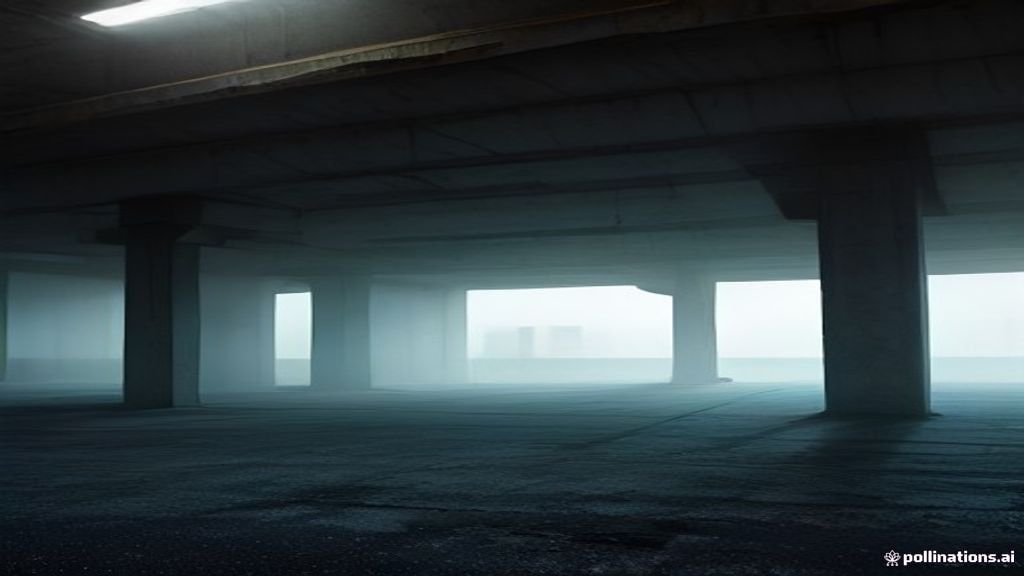
Concrete ramps spiral upward in a slow, gentle curve. Fluorescent lights buzz overhead, one of them flickering at a pace that feels deliberate. Painted numbers on the pillars tell you which level you are on, yet each looks the same as the last. Your footsteps clap against the walls. The cars that should be here are gone, leaving oil stains and chalk marks like ghost signatures. You came to collect something, perhaps your own car, but you cannot recall where you left it, and the exit signs seem to lead only to other levels.
A parking garage is a place designed for temporary stops, a space between destinations in which no one intends to stay. In dreams it often carries the quality of transition: you are between places, between phases, or between decisions. Emptiness adds the sense of absence and slight menace familiar from late-night car parks. The result is an image of in-between unease, where progress feels suspended and the way out is hard to find.
This article explores the main interpretations of an empty parking garage dream, how details such as levels, light and the missing car alter the reading, and how to use the dream to understand your own transitions. It is symbolic and not a prediction. If the dream follows an unsettling event, the practical sections suggest ways to regain a sense of direction.
The symbol in parts
The garage stands for a pause between journeys. Levels stand for stages and options. The car stands for your drive and independence. Emptiness stands for absence and quiet. The exit stands for a way forward.
Main meanings
Transition
Between one phase and another.
Unease
A mild but persistent anxiety.
Lost direction
Unclear sense of where to go.
Missing resources
The absence of your car suggests lacking means or agency.
Isolation
A sense of being alone in an impersonal place.
Waiting
Time suspended before a next step.
Repetition
Levels that look alike suggest a looping pattern.
Details and their meaning
- Cannot find the car: lost agency or direction.
- Car is missing: loss of independence.
- Flickering lights: unstable clarity.
- Dark levels: uncertainty ahead.
- Exit is blocked: feeling trapped.
- Elevator that fails: lack of easy routes.
- Following arrows: trusting a system.
- Echoing footsteps: awareness of loneliness.
- Rooftop level: finding perspective.
- Another person appears: support or threat.
- Finding the exit: relief and progress.
Interpreting your feelings
Unease suggests an unsettled in-between time. Fear suggests worry about being vulnerable. Boredom suggests stagnation. Calm suggests acceptance of a pause. Ask where in life you feel suspended, such as between jobs, homes or relationships.
Possible triggers
- A job change, a move or a breakup.
- Long periods of uncertainty.
- Night shifts or late returns.
- Anxiety about safety.
- Car trouble or travel plans.
- Films and stories set in car parks.
Using the dream
- Name the in-between. What phase is ending?
- Find your level. Where are you now?
- Look for signs. What clues point out?
- Locate your car. What resources can you reclaim?
- Ask for directions. Help is allowed.
- Plan the exit. One step at a time.
Frequently asked questions
Does it mean I am trapped?
It may reflect a feeling, not a fact.
Why is it empty?
Emptiness emphasises absence and in-between time.
Why can I not find my car?
This often relates to lost agency or direction.
Is it dangerous?
The dream does not predict danger.
Cultural notes
Sociologists describe places like car parks, airports and corridors as non-places, spaces of passage without strong identity. Writers and artists have used them to evoke modern alienation, and the aesthetic of empty, fluorescent-lit spaces has become popular online. Dreamers often report such places during periods of change. Recognising the cultural image helps you see the dream as a comment on transition rather than a threat.
A practical angle
If you feel suspended, make a quick map of your situation: where you were, where you are, and where you hope to be. Mark the next two concrete steps, such as applying, packing, calling or deciding. Even small steps give the sense of climbing a ramp. If you are in a period of enforced waiting, plan how to use it, perhaps with learning, rest or building connections. If the dream follows real safety concerns, review your habits around late-night travel and ask for company where needed.
Finding the car
The missing car is a rich detail. Cars in dreams often stand for personal drive and the ability to move toward goals. Forgetting where it is parked can reflect a period when your motivation or resources feel out of reach. Make a list of what you need in order to move: money, skills, permission, energy, support. Then identify which are within your reach. Retrieving a car is a practical task, and so is rebuilding momentum.
Questions for reflection
- What phase am I between?
- Where is my sense of direction?
- What resources do I need?
- Who can help me find the exit?
- What step can I take today?
A short illustration
A woman dreamed of an empty parking garage while between jobs. She felt aimless until she mapped her options. After three conversations and one application, her dreams shifted to bright open roads.
Further reflection
In-between spaces are uncomfortable, but they are where direction is chosen.
When to seek support
If unease persists or you feel unsafe or hopeless, speak with a doctor, counsellor or trusted person.
Closing thoughts
An empty parking garage dream speaks of transition and unease. Name the pause, find your car and plan the exit.